 Ferndale Siding
 Board & Batten Siding in Kendall's Wooded Valley Setting
Kendall sits inland from Bellingham Bay, tucked into the foothill country of Whatcom County along the Nooksack River corridor. It's a different environment than the exposed, wind-driven lots closer to the water. Homes here tend to sit under mature fir and cedar canopy, on larger wooded lots, with more shade and less direct sun on any given wall than you'd find in a more open subdivision. That changes what siding needs to do. Less UV exposure sounds like an easy win, but it comes with a trade-off: shaded walls dry out slower after rain, and slower drying is exactly what lets moss, algae, and moisture damage get a foothold.
Board and batten is a natural fit for this kind of property. It's a classic look for farmhouse, craftsman, and rural-style homes — the vertical lines read well against a wooded backdrop and pair naturally with covered porches, barns, and outbuildings that are common on larger Kendall parcels. But the same vertical joints and batten strips that make the style distinctive are also the places where water intrudes if the installation isn't done correctly. This page is about doing board and batten right, specifically for the conditions a Kendall home actually deals with.
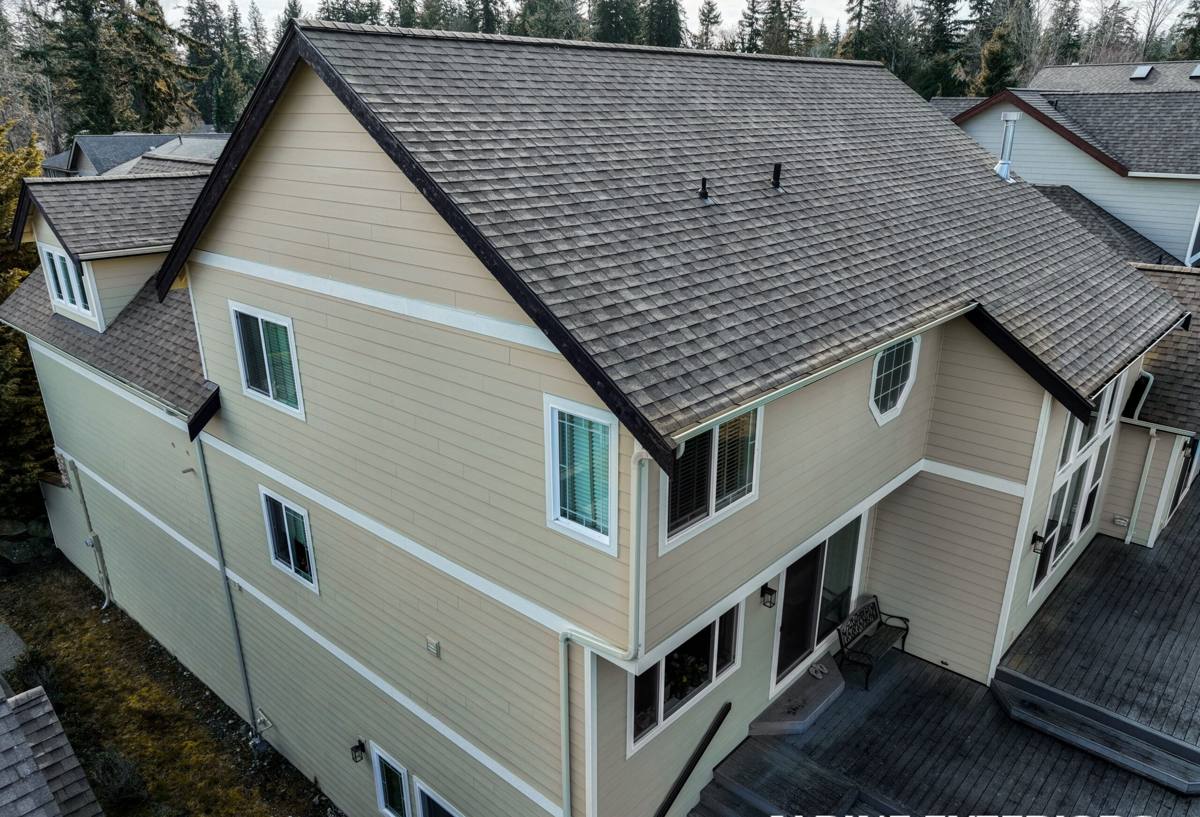
Why Board & Batten Fits Kendall Homes
Beyond the look, there are practical reasons board and batten works well out here:
- Vertical panels shed water down and off the wall rather than pooling on horizontal ledges, which matters on shaded, slower-drying walls.
- The style suits the larger lot sizes and rural character common around Kendall — it doesn't look out of place next to outbuildings, detached garages, or older farmhouses in the area.
- Battens can be spaced to cover structural seams cleanly, which is useful on additions or homes with mixed wall framing, common on older Whatcom County properties that have been added onto over the years.
- It reads well from a distance, which matters on wooded lots where the house is often viewed through trees rather than up close from a sidewalk.
None of that matters, though, if the water management underneath is wrong. Style is the easy part. Getting the wall assembly right is what determines whether the siding is still doing its job in twenty years.
What Kendall's Climate Actually Does to Siding
Whatcom County's marine climate means driving rain for a good chunk of the year, and a moss season that can run long — especially on north-facing or shaded walls, which describes a lot of tree-covered Kendall lots. Add tree cover and you get more standing humidity against the wall, more organic debris (needles, seeds, pollen) collecting in batten channels and at the base of the wall, and slower dry-out after storms. This isn't unique to Kendall, but the tree canopy and valley setting tend to make it more pronounced than on an open, sun-exposed lot closer to town.
For board and batten specifically, that means three things matter more here than they would on a drier, more exposed site:
- Drainage behind the panels. A wall assembly that can't dry out between rain events will hold moisture at the sheathing, regardless of how good the surface finish looks.
- Batten and panel material that won't wick water. Wood battens on a wood substrate absorb moisture at the seams — exactly where board and batten sees the most water contact.
- Ground clearance and grade. On wooded, sometimes uneven lots, sod, mulch, or landscaping can creep up against the bottom of the siding over time, holding moisture right where the wall is most vulnerable.
The James Hardie Board & Batten System
We install James Hardie fiber cement exclusively, and for board and batten that means the HardiePanel vertical siding system paired with HardieTrim battens. Fiber cement doesn't absorb and swell the way wood or engineered wood products can, which is the main reason it holds up better at the vertical seams that define this style. The panels come with Hardie's ColorPlus factory finish — baked-on color with a stronger bond than field-applied paint, which matters on a style where touch-up painting of dozens of narrow batten strips would otherwise become a recurring maintenance chore.
Hardie's HZ5 product line is engineered for climates like ours — cold, wet winters and sustained moisture exposure — and is what we spec for Kendall installations. The material is also non-combustible, which is a real consideration on wooded lots with defensible space concerns, even outside of active wildfire zones.
Board & Batten Options
| Approach | What It Is | Where It Fits |
|---|---|---|
| HardiePanel vertical siding + battens | Large fiber cement sheets with trim battens applied over the seams | Most Kendall homes — efficient install, clean lines, fewer seams overall |
| Individual board-and-batten (traditional) | Narrower boards installed side by side with battens covering each joint | Historic-style homes or additions where a tighter, more traditional board rhythm is wanted |
| Mixed with HardiePlank lap siding | Board and batten on gables or accent walls, lap siding on the main body | Homes wanting the farmhouse look on select elevations without full vertical coverage |
What a Correct Installation Involves
Moisture Barrier and Rainscreen
Before any panel goes up, the wall needs a properly lapped weather-resistive barrier, correctly flashed at every window, door, and penetration. On shaded, slow-drying walls like many in Kendall, we favor a rainscreen gap behind the panels wherever the wall assembly allows it — a small air space that lets bulk water drain and the wall dry from both sides instead of trapping moisture directly against the sheathing.
Panel and Batten Spacing
Panels need consistent, code-compliant fastening and expansion clearance — fiber cement moves slightly with temperature and moisture, and batten placement has to account for that instead of pinning the panel rigid at every seam. Battens are set to actually cover the panel joint, not just sit near it, and are fastened per Hardie's engineering specs rather than "close enough."
Flashing and Trim Details
Every horizontal trim piece — window heads, belt lines, roof-to-wall transitions — needs metal flashing that directs water out and away from the substrate. This is the detail that separates a board and batten job that lasts from one that starts showing water stains at the trim lines within a few years.
Finish and Caulk Joints
ColorPlus panels arrive factory-finished, so field caulking is limited to specific joints called out in the manufacturer's install guide — not slathered across every seam as a substitute for proper flashing. Over-caulking traps water in exactly the places it needs to escape from.
Our Process in Kendall
- On-site assessment. We look at sun exposure, tree cover, grading, and existing moisture damage on your specific walls before recommending anything.
- Tear-off and sheathing check. Old siding comes off and we inspect the sheathing underneath for rot or damage before it's covered up again.
- Weather barrier and flashing. Housewrap, window and door flashing, and rainscreen furring (where applicable) go in first — this is the layer that actually keeps water out.
- Panel and batten installation. HardiePanel and HardieTrim battens installed to manufacturer fastening and spacing specs.
- Detail and cleanup work. Final trim, touch-up caulking at specified joints, and site cleanup, including debris that tends to collect around wooded lots during a project.
What to Check Before Hiring for Board & Batten
- Ask whether they're installing true fiber cement or an engineered wood/composite product marketed as "board and batten."
- Confirm they follow James Hardie's published fastening and clearance specs, not a generalized siding install process.
- Ask about rainscreen or drainage plane details on shaded or wooded lots specifically.
- Check that ground clearance and grading around the foundation are part of the plan, not an afterthought.
- Ask how they handle flashing at window and door heads — this is where most board and batten failures start.
- Get specifics on warranty coverage: manufacturer material warranty versus the contractor's workmanship warranty are two different things.
Why a Crew That Already Works Kendall Matters
Kendall isn't downtown Ferndale. Lot sizes, tree cover, well and septic setups, and county permitting quirks are all a little different than a standard in-town job. A crew that's worked the area already understands things like how much shade a given elevation is realistically going to get year-round, how tree debris behaves in batten channels over a wet Whatcom County winter, and what grading adjustments actually hold up on sloped, wooded parcels. That familiarity shows up in fewer surprises during the job and a wall assembly that's built for the site it's actually on, not a generic spec sheet.
Board and batten siding done right is a long-term investment in a home's protection, not just its curb appeal. If you're weighing options for a Kendall property, we're happy to walk the site, look at your specific exposure and shade conditions, and give you a straight answer on what the job actually involves. Reach out for a free, no-pressure estimate using the form below.