 Ferndale Siding
 Siding Installation for Custer Homes
Custer sits close enough to the water and the Canadian border that salt-laden air reaches most properties in town, not just the ones with a direct view of the shoreline. Combine that with wind-driven rain that rarely falls straight down and a moss season that stretches across most of the calendar, and you get a set of conditions that puts real, sustained stress on a home's exterior wall. Siding installation here isn't just a cosmetic upgrade — it's the single biggest factor in whether a wall assembly stays dry, structurally sound, and low-maintenance for the next thirty years or starts causing problems within the first five.
We install siding in Custer regularly, and this page walks through what that job actually involves: what the local climate demands from the material and the install, how we approach the work step by step, and why the details matter more here than they would in a milder, drier market.
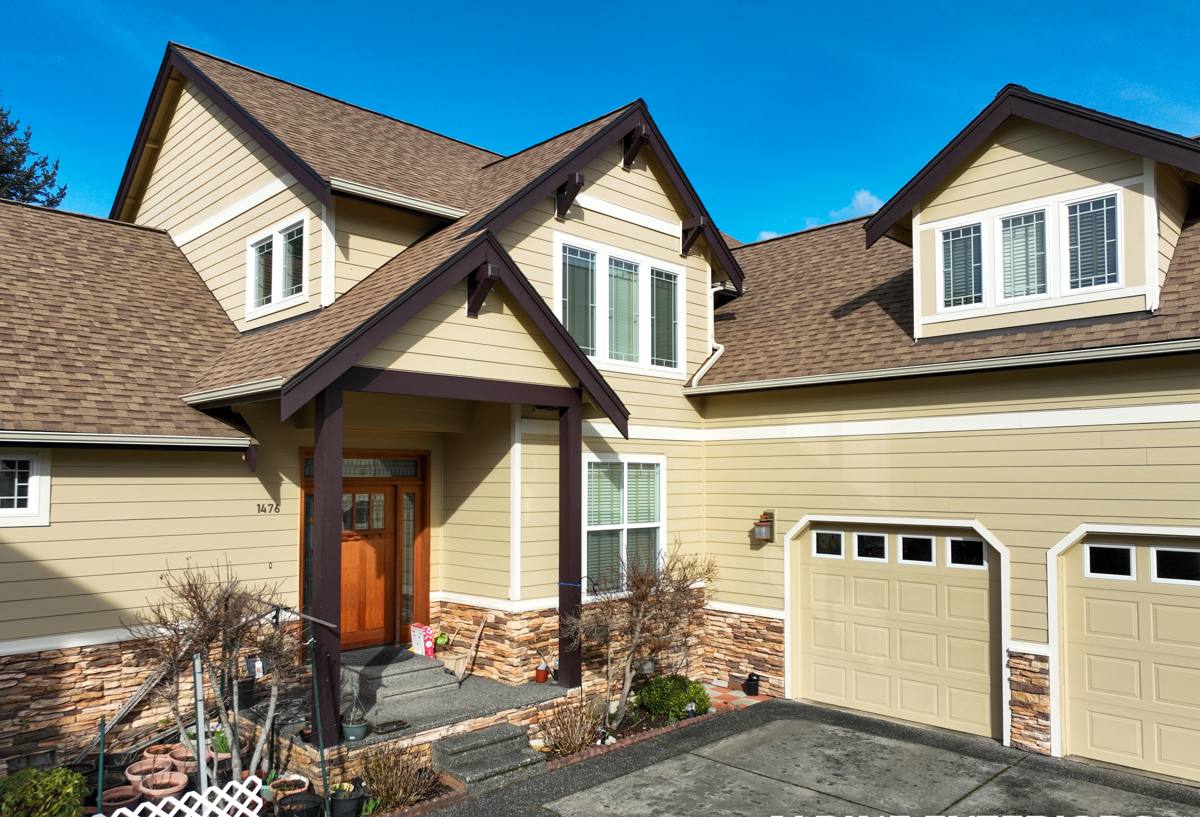
What Custer's Climate Demands From a Siding Installation
A siding job that would hold up fine in a dry inland climate can fail early here if it isn't detailed for the conditions Custer actually sees. Three factors drive most of what we plan around.
Salt Air and Fastener Corrosion
Salt-laden air off the water accelerates corrosion on exposed metal — fasteners, flashing, and trim hardware — faster than it would inland. An installation that uses the wrong fastener grade, or that leaves fastener heads exposed instead of properly seated and sealed, sets up a slow failure that shows up years later as streaking, loosening boards, or rust bleed-through on the finish.
Wind-Driven Rain
Rain here often arrives sideways, pushed by wind rather than falling straight down. That means water gets tested against every lap joint, every seam, and every penetration around a window or door — not just the flat face of a wall. An installation that treats flashing and lap overlap as a formality instead of a functional water-management system will leak, and it's usually the seams and corners that show it first.
A Long Moss and Mildew Season
Mild, damp conditions for most of the year mean moss and mildew growth is active on shaded and tree-lined walls for much longer here than in a drier region. That organic growth traps moisture directly against the siding surface, which is a slow but real contributor to hidden rot if the wall isn't detailed to let moisture drain and dry rather than sit.
None of these three conditions is dramatic by itself. Stacked together over a decade or two, they separate a correctly installed exterior from one that quietly turns into a maintenance problem.
What a Correct Siding Installation Actually Involves
The material matters, but installation quality is what determines whether that material performs the way it's supposed to. We install James Hardie fiber cement exclusively, and even the best material in the world underperforms if these details get rushed.
| Installation Detail | Why It Matters in Custer |
|---|---|
| Manufacturer-specified clearances from grade, roofline, and decks | Keeps splash-back and standing moisture away from board edges in a high-rainfall climate |
| Correct fastener type, spacing, and depth | Resists corrosion from salt air and keeps boards seated without cracking |
| Flashing at every window, door, and penetration | Directs wind-driven rain away from seams instead of letting it collect there |
| Rain screen or drainage plane behind the siding | Lets any moisture that gets past the surface drain and dry instead of sitting against the sheathing |
| Factory-cut edges used wherever possible; field cuts sealed to spec | Preserves the factory finish's protection at every cut edge |
| Proper lap overlap and joint treatment | Sheds sideways rain instead of relying on caulk to hold a seam together |
A crew that skips any of these steps can still make a wall look finished on install day. The difference doesn't show up until the wall gets tested by a few real wet seasons, which is exactly the kind of callback we're trying to prevent by getting it right the first time.
Our Installation Process, Step by Step
- Walk-through and assessment. We inspect the current siding, trim, and any visible signs of moisture damage, and talk through what you're seeing and what you want out of the project.
- Tear-off and substrate inspection. Removing the old siding is also when hidden problems surface — soft sheathing, past water intrusion, or damaged framing that needs to be addressed before anything new goes on the wall.
- Substrate repair. Any rotted sheathing or framing gets replaced. Installing new siding over a compromised substrate just hides the problem instead of fixing it.
- House wrap and drainage plane installation. This layer is what actually manages moisture that gets past the siding surface — it matters more than most homeowners realize, and it's invisible once the job is done.
- Flashing at every penetration. Windows, doors, hose bibs, light fixtures, and vents all get properly flashed before siding closes around them.
- Siding installation to manufacturer spec. Correct clearances, fastening, and lap overlap, following James Hardie's published installation requirements rather than general siding habits.
- Trim, caulking, and finish work. Factory-finished trim goes in around corners, windows, and doors, and any necessary sealant is applied at transitions — not as a substitute for good flashing, but as the last line of defense.
- Final walk-through. We go over the finished job with you before calling it done.
Choosing the Right Hardie Product for Your Custer Home
We install James Hardie fiber cement exclusively — no vinyl, LP SmartSide, Cemplank, Allura, primed spruce, or cedar. That's a deliberate professional standard, not a lack of options. Within the Hardie lineup, though, there's real choice depending on your home's style and exposure.
| Product Line | Best Use | Why It Fits Custer |
|---|---|---|
| HardiePlank lap siding | Most single-family homes | Traditional lap profile sheds wind-driven rain effectively when overlap and flashing are correct |
| HardiePanel vertical siding | Accent walls, gables, modern designs | Clean lines that pair well with board-and-batten style detailing |
| HardieShingle siding | Craftsman-style homes and accent sections | Textured shingle look without the moisture absorption and upkeep of real wood shingle in a damp climate |
| HardieTrim boards | Corners, window and door casing, fascia | Factory-finished trim resists the same salt air and moisture exposure as the field siding |
Color and profile come down to personal preference and the home's architecture, but the underlying decision to spec HZ5-engineered Hardie product for this climate zone, with a factory-applied ColorPlus finish, is consistent across every job we do here.
Signs Your Custer Home May Need New Siding
Some siding problems are obvious from the ground. Others hide behind an intact-looking surface until they've been developing for years. A quick self-check before calling anyone is worth doing.
- Soft spots, bubbling, or visible warping anywhere on the siding surface
- Persistent moss, mildew, or dark staining on shaded or north-facing walls that keeps returning after cleaning
- Cracked, peeling, or chalking paint on wood-based or previously painted siding
- Gaps opening up at seams, corners, or where trim meets siding
- Rust streaking near fasteners or metal flashing
- Rising heating or cooling bills without another clear explanation
- Visible daylight or drafts at trim lines from inside the home
Any one of these on its own might be minor. Several together usually mean it's worth having someone take a closer look before the next wet season.
Repair, Partial Replacement, or Full Re-Side
Not every siding issue in Custer calls for tearing off the whole house. A section damaged by impact, an isolated area of failed trim, or a small patch of water intrusion around one window can often be repaired or partially replaced and matched into existing Hardie siding. But if moisture has been tracking behind the wall for a while, or if the home still has an aging, non-Hardie product nearing the end of its service life, patching it usually just delays a bigger job while the underlying damage keeps spreading. We'll give you a straight answer about which situation you're actually in rather than defaulting to the bigger, more expensive scope.
What Drives the Cost of a Siding Installation Here
| Factor | What It Affects | Why It Matters in Custer |
|---|---|---|
| Tear-off vs. overlay | Labor scope and substrate access | Tear-off reveals hidden moisture and rot damage common under older siding in this climate |
| Substrate condition | Repair costs before new siding goes on | Long-term trapped moisture from wind-driven rain and moss can rot sheathing and framing |
| Home size and complexity | Material quantity and labor hours | More corners, gables, and window penetrations mean more flashing and trim detail work |
| Proximity to the water | Fastener and hardware spec | Homes closer to salt air exposure benefit from corrosion-resistant fastener choices |
| Site access | Staging and labor time | Wooded or tight lots common in the area can add setup time compared to open lots |
We don't quote off a generic price sheet. Every estimate starts with an in-person walk of the property, because the real cost drivers — substrate condition, exposure, and access — vary too much from house to house to guess at from a phone call.
Why a Local Crew Matters for This Job
A crew that installs siding in Custer regularly has already seen how salt air, wind-driven rain, and a long moss season behave on real homes here over full seasons, not just how a product performs on a spec sheet. That experience shapes decisions on install day that a generalist crew working from a different region might not think twice about: which wall orientations stay wet longest and need extra flashing attention, which fastener spec actually resists this area's salt exposure over time, and where a rushed detail is most likely to cause a callback two winters from now. Whatcom County's coastal towns don't all behave identically, either — a property near the water in Custer carries a different exposure profile than an inland lot a few miles away, and that distinction is worth accounting for rather than treating every job the same way.
Get a Free, No-Pressure Estimate
If your Custer home needs new siding, a repair, or just an honest opinion on what's happening behind the walls right now, we're glad to take a look. Reach out using the form below to schedule a free estimate — no pressure, and a straight answer about what your home actually needs.