 Ferndale Siding
 Building Decks for Custer's Coastal Weather
Custer sits close enough to the water that salt air is a real design factor, not an afterthought. Combine that with Whatcom County's long wet season and the moss growth that comes with shaded, damp yards, and you get a climate that is genuinely hard on outdoor structures. A deck built here has to handle driving rain that comes in sideways off the water, months of standing dampness under and around the boards, and the slow biological growth that colonizes anything that stays wet too long. Decks that are designed for a drier inland climate — thinner coatings, minimal ventilation, standard fasteners — tend to show their age fast out here. A deck built specifically for this stretch of Whatcom County holds up differently, and that starts with decisions made before the first board is cut.
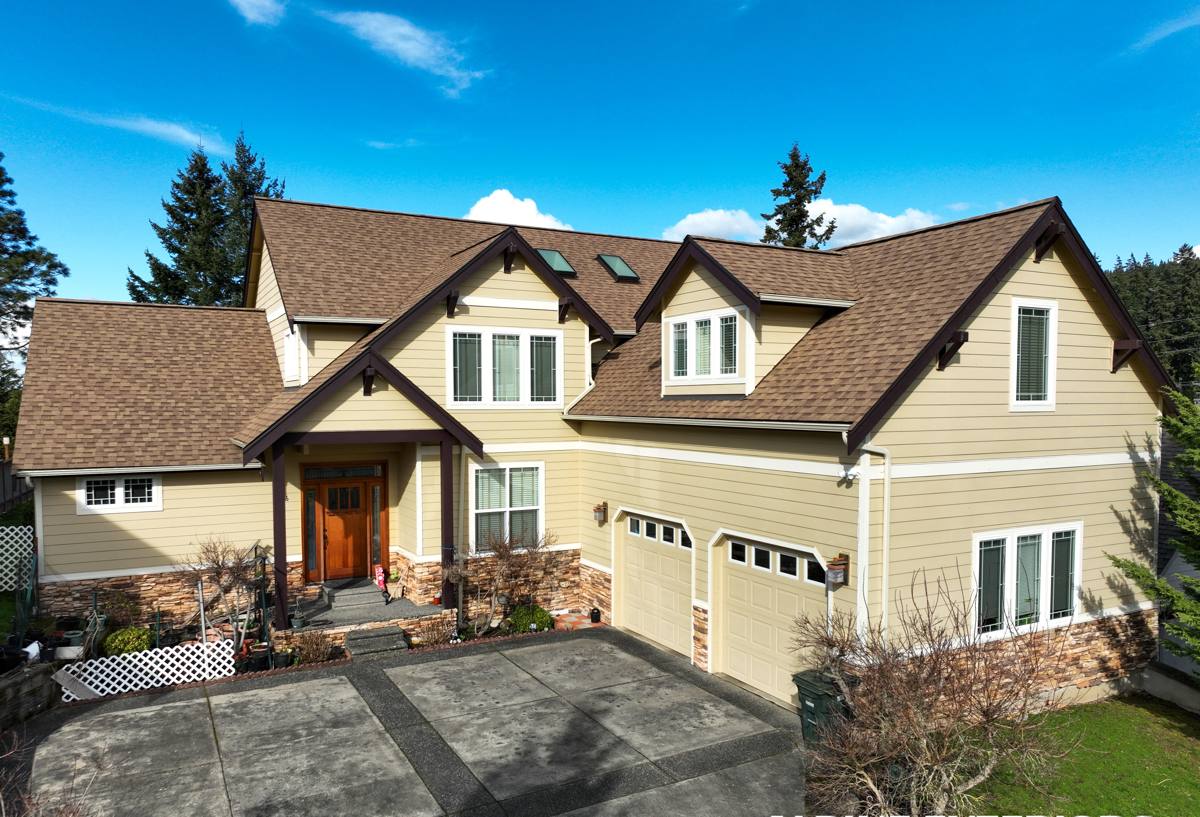
What Custer Homes Need From a Deck
Most of the decks we work on in Custer sit on lots with some combination of tree cover, proximity to open water or wind exposure, and soil that stays saturated for long stretches of the fall and winter. Each of those conditions changes how a deck should be built.
Salt Air and Wind Exposure
Homes closer to the shoreline deal with airborne salt that accelerates corrosion on anything metal — fasteners, brackets, railing hardware. It also dries out and degrades cheaper finishes faster than an inland deck would experience.
Shade, Moisture, and Moss
Mature trees are common on Custer properties, and they're worth keeping for shade and privacy. But shade means a deck surface that doesn't dry out between rain events, which is exactly the condition moss and algae need to take hold. Boards that stay damp and shaded are also more prone to rot at the joints and fastener points if they weren't detailed correctly.
Standing Water and Drainage
A lot of yards in this area have heavy clay-influenced soil that doesn't drain quickly. If a deck's footings, framing, and grading aren't planned around that, water sits against the structure longer than it should, which is where slow rot problems start.
Choosing the Right Decking Material for This Climate
There's no single "best" decking material — the right choice depends on how much maintenance a homeowner wants to do, how shaded the site is, and budget. Here's how the common options actually perform under Custer's conditions.
| Material | How It Handles Moisture & Moss | Maintenance | Typical Lifespan |
|---|---|---|---|
| Pressure-treated wood | Resists rot with proper sealing, but end grain and fastener points need attention; moss can grow on shaded surfaces if not cleaned | Annual cleaning and resealing recommended | 15–20 years with upkeep |
| Cedar | Naturally moisture- and insect-resistant, ages gracefully, but still needs periodic care in shaded, damp spots | Cleaning and oil/stain every 1–2 years | 20–25 years with upkeep |
| Composite decking | Doesn't absorb water like wood, resists rot, but can still grow surface algae/moss in constant shade if not rinsed occasionally | Occasional cleaning, no sealing or staining | 25–30+ years |
| PVC decking | Fully moisture-resistant, best option for constantly shaded or splash-prone areas | Low — occasional rinsing | 30+ years |
For fully shaded lots or decks near ground level where moisture lingers, we lean homeowners toward composite or PVC simply because they don't give moss and rot the organic material they need to take hold. For sunnier, more open sites, a well-detailed wood deck is a perfectly reasonable choice — the tradeoff is honest maintenance, not a flaw in the material itself.
Framing and Structure: Where Decks Actually Fail
The decking surface is what homeowners see, but almost every deck failure we get called out to inspect started underneath — in the framing, the ledger connection, or the footings. This is the part of the build that determines whether a deck lasts fifteen years or thirty-five.
Ledger Board Flashing
Where a deck attaches to the house is the single most common source of hidden water damage. Without proper flashing that directs water away from the house sheathing, moisture works its way behind the siding over years, causing rot that isn't visible until it's serious. In a climate with this much annual rainfall, this detail is not optional.
Joist Protection
Untreated or under-protected joist tops trap water in the fastener holes where deck boards attach, which is exactly where rot starts from the inside out — often long before it's visible from above. Joist tape or an equivalent moisture barrier over the top of every joist is standard practice on our builds for this reason.
Footings and Post Bases
On lots with slow-draining soil, footings need to be set below frost depth and post bases need to keep the wood post itself off the concrete and out of standing water. A post sitting directly in a puddle after every rain is a rot problem waiting to happen, regardless of what material the post is made from.
Ventilation Underneath
Low-clearance decks that don't get airflow underneath stay damp far longer after a storm than decks with proper clearance or ventilation gaps. That trapped moisture is a major contributor to both structural rot and the kind of persistent moss and mildew that shows up on the underside of boards.
Railings, Fasteners, and Hardware That Survive Salt Air
Hardware is an easy thing to under-spec because it's a small part of the total material cost, but it's often the first thing to fail near the coast. Standard galvanized fasteners can start showing corrosion within a few years in salt-influenced air. We use stainless steel or coated fasteners rated for coastal exposure on Custer projects, along with corrosion-resistant brackets and railing hardware. For railings themselves, aluminum and properly finished composite or PVC systems tend to outperform basic wood or unfinished metal in this environment, since they don't need repainting or re-staining to keep corrosion and rot at bay.
Our Process From Design to Finished Deck
- Site walk and assessment — we look at sun/shade exposure, drainage patterns, soil condition, and how close the site is to wind or salt exposure to inform material recommendations.
- Design and material selection — layout, size, and material choices are made together with the homeowner, with honest tradeoffs explained for each option.
- Permitting — we handle the permit application and inspection scheduling required by Whatcom County for the project.
- Footings and framing — footings are set to proper depth, ledger flashing and joist protection are installed before any decking goes down.
- Decking, railing, and finish work — surface material and railings are installed, with all fasteners and hardware matched to the site's exposure level.
- Final walkthrough — we go over the finished deck and a maintenance plan specific to the material chosen.
Maintenance Checklist for a Long Deck Life
Whatever material a deck is built from, a little seasonal attention goes a long way in this climate. This is the routine we recommend to Custer homeowners:
- Clear leaves and debris from between boards and off the surface before fall rains set in — trapped debris holds moisture against the wood.
- Rinse or lightly scrub shaded areas where moss or algae tends to start, ideally before it gets a foothold rather than after.
- Check railing posts and stair connections annually for any looseness, which can signal a fastener or framing issue underneath.
- Reseal or restain wood decking on the schedule appropriate to the product — don't wait until the finish has visibly failed.
- Keep gutters and downspouts near the deck clear so roof runoff isn't dumping extra water onto or under the structure.
- Trim back vegetation that's shading the deck more than necessary, to help the surface dry out between storms.
Permits and Local Considerations
Deck projects in unincorporated Whatcom County, which includes Custer, typically require a building permit, and larger or elevated decks may need engineered footing or structural plans depending on size and height. Permit requirements exist to make sure footings are adequate for local soil and frost conditions and that structural connections are inspected before they're covered up — steps that matter more here than in a milder, drier climate. We handle the permit process as part of the job so homeowners aren't left navigating it on their own.
Why a Crew That Already Works Custer Matters
A deck built without accounting for this area's rain volume, salt exposure, and moss-friendly shade tends to need repair or replacement well ahead of schedule. Crews that build regularly in Custer and the surrounding Ferndale area already know which details — ledger flashing, joist protection, fastener grade, drainage planning — actually matter here versus in a drier region, because we've seen what happens when they're skipped. That local experience shows up less in the finished look of a deck and more in how it's still performing ten and twenty years later.
If you're planning a new deck or replacing one that hasn't held up to Custer's weather, we're happy to walk the site, talk through material options honestly, and put together a free, no-pressure estimate. Use the form below to get started.