 Ferndale Siding
 Living With Salt Air, Rain, and Moss: What Custer Siding Has to Withstand
Custer sits in the open, wind-exposed part of Whatcom County, close enough to the Strait of Georgia and Birch Bay that salt-laden air is a regular part of the weather, not an occasional event. Add the region's driving rain — the kind that comes in sideways off the water during fall and winter storms — and a moss season that can stretch from October through May, and you've got a siding environment that punishes anything not built and installed for it. Homes here don't fail because of one bad storm. They fail slowly, from years of moisture finding its way behind boards, fasteners corroding under paint film, and moss holding damp against wood that was never meant to stay wet this long.
Board & batten siding is a great look for the farmhouses, shops, and rural properties common around Custer — but the style only works long-term if the material and the installation account for this specific climate. That's what this page covers: what board & batten needs to survive in Custer, what a correct installation actually involves, and how we approach the job differently than a crew that installs the same siding everywhere without adjusting for local conditions.
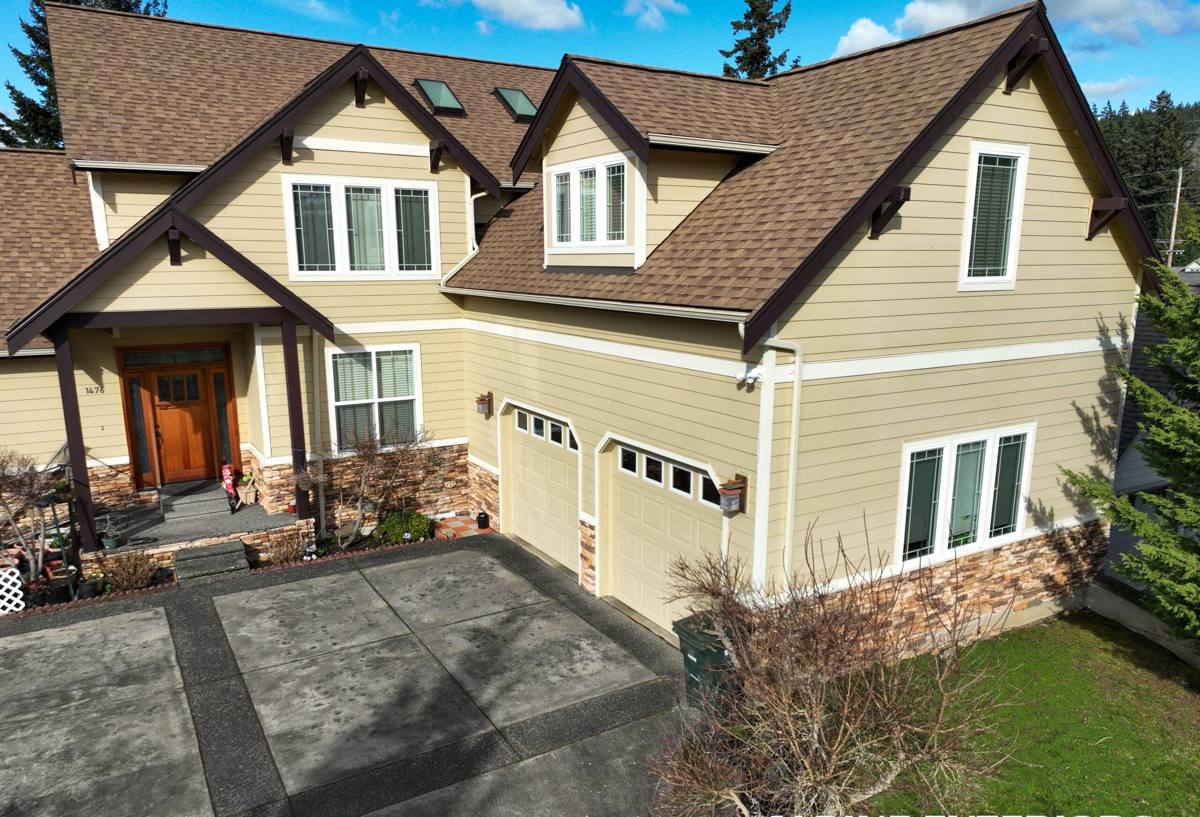
Why Board & Batten Fits Custer's Homes
Board & batten is a vertical siding pattern — wide boards installed with a gap between them, covered by narrower battens — that reads as clean, tall, and a little rustic without looking dated. It's a natural match for the agricultural and semi-rural character around Custer: barns, outbuildings, and farmhouse-style homes have used vertical board patterns for generations because the look suits open land and working properties. It also pairs well with the mix of newer builds and older remodels in the area, giving a home strong vertical lines and shadow depth that flat lap siding doesn't offer.
The style's popularity is exactly why it gets installed poorly so often. Vertical siding has different water-shedding behavior than horizontal lap, and it exposes more seams — the board-to-batten joints — that have to be detailed correctly or they become entry points for water. A good-looking board & batten job and a durable one aren't automatically the same job.
The Three Climate Stresses Board & Batten Must Handle in Custer
Salt-Laden Air and Fastener Corrosion
Airborne salt accelerates corrosion on anything metal — nail heads, flashing, trim fasteners — and once a fastener starts rusting, it stains the siding around it and eventually loses its grip. This is one of the biggest arguments against uncoated or poorly coated fasteners on any home near Custer's shoreline-influenced air, board & batten included, since the batten strips alone typically require more linear feet of fastening than a comparable lap job.
Driving Rain and Wall Assembly Moisture
Wind-driven rain doesn't just wet the siding surface — it pushes water sideways and upward against vertical joints and battens, testing every seam in the wall. If there's no drainage gap behind the siding, that moisture has nowhere to go and gets trapped against the sheathing, where it can sit long enough to cause rot, even if the siding itself looks fine from the street.
Whatcom County's Long Moss Season
Cool, damp, and shaded conditions for much of the year mean moss and algae get a long runway to establish themselves, especially on north-facing walls and anywhere tree cover blocks sun and airflow. Moss holds moisture against the siding surface far longer than open air would, which is hard on any material that isn't dimensionally stable or that absorbs water into its core.
Why We Install James Hardie Board & Batten — Not Vinyl, LP, or Cedar
We install James Hardie fiber cement exclusively, in every style including board & batten. We don't offer vinyl, LP SmartSide, primed spruce, or cedar board & batten, and that's a deliberate standard, not a supply limitation. Here's the honest comparison for this specific climate and this specific siding style:
| Material | Behavior in Salt Air & Driving Rain | Moss & Moisture Resistance | Typical Field Lifespan |
|---|---|---|---|
| James Hardie fiber cement | Non-combustible, dimensionally stable, factory-baked ColorPlus finish resists salt-driven fading and chalking | Won't absorb water into its core or rot from prolonged dampness; engineered for wet climates | 30+ years with correct install and basic upkeep |
| Vinyl board & batten | Can warp or oil-can in temperature swings; battens are often hollow, trapping condensation | Doesn't rot, but seams and channels collect moss growth and debris | 15-25 years, fades and becomes brittle over time |
| LP SmartSide (engineered wood) | Wood-strand core is vulnerable if the factory edge seal is ever compromised on site cuts | Prolonged moss contact against an engineered wood substrate is a real risk factor | 20-30 years, heavily dependent on maintaining the factory coating |
| Cedar / primed spruce | Natural wood movement plus salt exposure accelerates checking and cupping | Absorbs moisture directly; needs active moss removal and refinishing to last | 15-25 years, shorter without diligent, ongoing maintenance |
Every one of those alternatives can be installed well and can perform reasonably in the right conditions. Our decision isn't that they're bad products — it's that for this specific climate, the maintenance burden and moisture risk of wood-based and vinyl options are higher than we're willing to put our name behind. Hardie's fiber cement core doesn't rot, doesn't feed moss the way organic material can, and holds its factory finish through the kind of salt exposure and driving rain Custer sees every year. That's why it's the only board & batten system we install.
What a Correct Board & Batten Installation Actually Involves
The siding material is only half the equation. A board & batten job installed without the right details will underperform even with premium boards. On every Custer installation, the fundamentals we won't skip include:
- A drainage gap behind the siding. A rainscreen or furring strip system lets any water that gets past the outer surface drain and dry instead of sitting against the wall.
- Correct flashing at every horizontal transition. Window heads, doors, and any roof-to-wall intersections need step and head flashing detailed before the siding goes on, not caulked over afterward.
- Manufacturer-specified fastening. Batten spacing, fastener type, and penetration depth follow James Hardie's published installation instructions, which is what keeps the transferable warranty valid.
- Proper board gapping and joint treatment. Vertical boards need expansion clearance and correctly sealed or shiplapped joints so seasonal movement doesn't open gaps over time.
- Factory-finished cuts sealed on site. Any field cut exposes raw material edge; those cuts get sealed per spec so the cut edge doesn't become the weak point in an otherwise sound installation.
Our Process, Start to Finish
- On-site assessment. We look at your home's exposure — how much direct salt air and wind-driven rain it takes, where shade and moss pressure are worst, and the condition of the wall assembly underneath the existing siding.
- Product and layout plan. We spec the right Hardie board & batten profile and color, and plan batten spacing and layout around your home's actual dimensions rather than a generic template.
- Removal and wall prep. Old siding comes off, and we address any moisture damage or sheathing issues we find before anything new goes up — problems don't get covered over.
- Water-resistive barrier and drainage plane. We install the moisture barrier and rainscreen gap that gives the wall assembly a way to dry.
- Flashing and installation. Boards and battens go up to Hardie spec, with flashing detailed at every penetration and transition first.
- Final inspection and walkthrough. We check fastening, caulking, and finish quality, and walk the job with you before calling it done.
Maintenance Your Custer Board & Batten Siding Will Actually Need
Correctly installed Hardie board & batten is low-maintenance, not no-maintenance. In this climate, plan on:
- A rinse-down once or twice a year, more often on shaded or north-facing walls where moss pressure is heaviest.
- A visual check of caulking at trim and joints every couple of years, since sealant is the first thing to wear before the siding itself does.
- Trimming back vegetation and tree cover that keeps a wall shaded and damp — airflow is one of the cheapest ways to slow moss growth.
- Watching for any soft spots, staining, or fastener rust as early warning signs, even though they should be rare with the right install.
What Board & Batten Siding Costs in Custer
Pricing depends on your home's size, wall condition, and how much detail work the layout requires. Rather than quote a number that won't match your project, here's what actually moves the cost:
| Cost Factor | How It Affects Your Project |
|---|---|
| Home size and wall complexity | More corners, gables, and window/door openings mean more flashing, cutting, and labor per square foot. |
| Condition of the existing wall assembly | Rot or moisture damage found during tear-off adds repair cost before new siding can go on. |
| Board & batten layout choices | Batten spacing, board width, and trim detail all affect material quantities and installation time. |
| Color and finish selection | Standard ColorPlus finishes vs. custom paint-matched colors carry different material costs. |
| Site access and prep needs | Scaffolding, landscaping around the foundation, and staging space all factor into labor time. |
We give a firm, itemized quote after seeing the actual home — not a phone estimate — so you know exactly what you're paying for before work starts.
Why a Crew That Already Works in Custer Makes a Difference
A contractor who mainly works in a different climate zone, or who splits time across a wide territory, doesn't build the same instinct for what Whatcom County weather does to a wall. We know how much drainage detail this area's rain actually demands, how far salt air travels inland from Custer's shoreline exposure, and which parts of a home fight moss the hardest through a typical Ferndale-area winter. That local pattern recognition shows up in small decisions — where we add extra flashing, which walls get discussed for moss exposure before the job even starts — that a crew unfamiliar with the area is more likely to miss.
It also means we're accountable locally. If a question comes up two years after installation, we're not a company that has to be tracked down from out of the area — we're already working in Custer and the surrounding communities on a regular basis.
If you're considering board & batten siding for a home in Custer, we're glad to come take a look and put together a straightforward, no-pressure estimate — just fill out the form below to get started.