 Ferndale Siding
 Why Blaine Siding Takes More Punishment Than It Should
Blaine sits right up against the water, and that proximity changes how siding ages. Homes here deal with salt-laden air blowing in off the bay, wind-driven rain that hits walls sideways instead of falling straight down, and a moss season that can stretch from fall into late spring. None of these are exotic problems — but together, over years, they wear siding down faster than homeowners expect, especially on the west- and south-facing walls that catch the worst of the weather.
Salt air is the one people underestimate most. It doesn't just sit on the surface — it works into seams, fastener heads, and any spot where the finish has thinned or chipped, accelerating corrosion and paint failure. Combine that with near-constant moisture from driving rain and shaded, damp conditions that favor moss and algae growth, and you get siding that looks tired well before it's actually worn out structurally — or, worse, siding that looks fine on the surface while water is already getting in behind it.
A repair job in Blaine has to account for all three factors at once. Patching a crack without checking what caused it, or cleaning moss without addressing why it keeps coming back, just buys a homeowner a few more months before the same problem resurfaces.
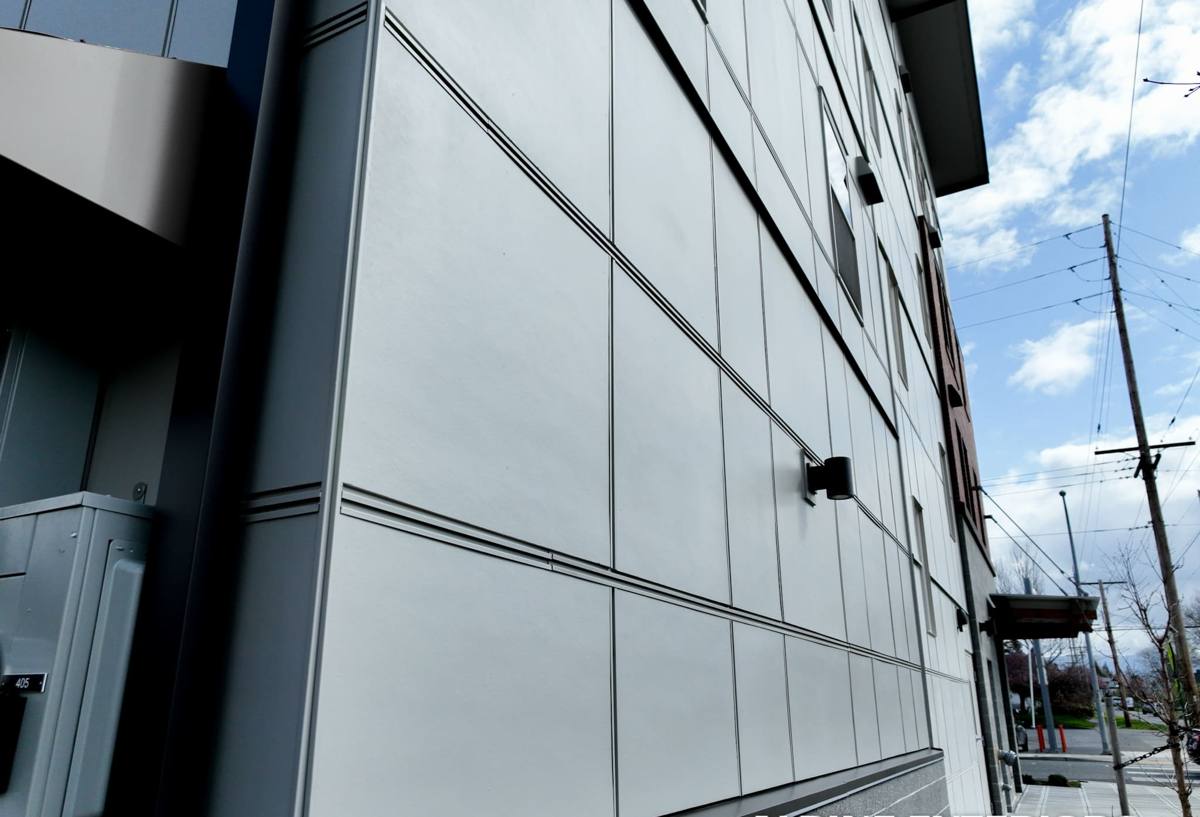
Signs Your Siding Needs Repair — Not Just a Wash
Some siding problems are cosmetic and some are structural, and the difference matters for how a repair gets handled. Watch for:
- Soft, spongy spots when you press on a panel — usually a sign of moisture trapped behind the cladding
- Persistent green or black staining that comes back within weeks of cleaning
- Cracked, chipped, or bubbling paint, especially around seams and butt joints
- Gaps opening up at trim, corners, or window and door casings
- Visible warping, cupping, or panels that no longer sit flush against the wall
- Nail heads popping through the surface or streaking with rust
- Caulk that's cracked, shrunk, or pulled away from joints
Any one of these can be a small, contained fix. Several showing up together — especially soft spots plus staining — usually means water has been getting behind the siding for a while, and the repair needs to start with finding the entry point, not just covering it up.
What a Correct Repair Actually Involves
Diagnosis Before Patching
The first step on any repair call is figuring out why the damage happened, not just where. A cracked panel near a downspout might be impact damage, or it might be a sign the downspout has been dumping water against the wall for years. Moss returning to the same three feet of siding under a roofline might mean a gutter is undersized or misaligned. Skipping this step is how homeowners end up paying for the same repair twice.
Checking Behind the Surface
Wherever we open up a section of siding for repair, we look at what's underneath — the house wrap, flashing, and framing. In a climate with this much driving rain, water management behind the cladding matters as much as the cladding itself. If we find rot or persistent moisture in the sheathing, patching the visible siding and leaving the underlying problem alone isn't a real repair.
Matching Materials the Right Way
A patch that doesn't match in profile, texture, or finish sticks out for years. Getting a clean match takes the right product on hand, the right cut lines, and attention to how the new piece integrates with existing trim and flashing — not just gluing a scrap into a hole.
Repair vs. Replace: How We Make the Call
Not every damaged section needs full replacement, and not every repair is worth doing if the siding is near the end of its useful life. Here's how we generally think through it:
| Factor | Repair Usually Makes Sense | Replacement Usually Makes More Sense |
|---|---|---|
| Extent of damage | Isolated to one or two sections or elevations | Widespread across multiple walls |
| Underlying moisture | None found once panel is opened up | Rot or sustained moisture found in sheathing/framing |
| Age of existing siding | Under 15–20 years, finish still sound | Original finish failing broadly, near end of service life |
| Material match available | Same product line still obtainable, close color match | Discontinued product or no reasonable match |
| Root cause | Fixable (flashing, sealant, gutter adjustment) | Systemic water management failure |
We'll tell you honestly which side of that table your home falls on. A lot of repair calls really are repairs — there's no reason to push a full replacement on a homeowner who doesn't need one.
Why We Rebuild and Patch with James Hardie — Not a Mixed Bag of Materials
We only install James Hardie fiber cement siding, and that applies to repair work too. When a repair requires new material — whether it's a few boards or a full elevation — we use Hardie product, not vinyl, LP SmartSide, or another fiber cement brand, even if that's what's already on the wall. Two reasons drive that:
First, mixing materials on one wall creates long-term problems of its own — different expansion rates, different moisture behavior, different maintenance needs down the road. Second, it's simply the product we know how to install correctly and stand behind. Hardie's ColorPlus factory-applied finish also gives us a much better shot at a clean color match than field-painted repairs, since the finish is baked on rather than mixed on site.
If a repair call turns into "the whole wall needs to come off," we'll say so plainly, and we'll only offer to rebuild it in Hardie. We won't recommend a product we don't install ourselves.
Our Repair Process for Blaine-Area Homes
- Inspection: We walk the exterior, check the areas you've flagged, and look at drainage, flashing, and grading around the house — not just the damaged section itself
- Diagnosis: We identify the likely cause, not just the visible symptom, and explain what we found in plain terms
- Scope and estimate: You get a written breakdown of what needs repair, what (if anything) should be replaced, and why
- Repair: We remove and replace only what's necessary, matching material and finish as closely as possible and correcting the underlying cause where we can
- Final check: We confirm seams, flashing, and caulking are properly sealed before we call the job done
Why a Crew That Already Works Blaine Matters
A contractor who mostly works inland doesn't always think about salt exposure on fasteners and trim, or how much worse moss growth gets on a shaded, damp wall a few blocks from the water. Crews who regularly work Blaine and the broader Ferndale area get a feel for which walls on which orientations fail first, how local moisture patterns behave, and what corners tend to need extra attention. That's not a marketing point — it changes where we look first on an inspection and what we flag as a likely repeat problem if it isn't addressed now.
It also means fewer surprises on scheduling and access, since we're not treating your job as a one-off drive-out. Whatcom County's coastal-influenced weather doesn't give a lot of dry windows for exterior work, and a crew that plans around that gets repairs done without dragging a project out through another rain system.
A Quick Self-Check Before You Call
Before scheduling an inspection, it helps to walk your own exterior and note what you see. Use this as a starting point:
- Press gently on suspect areas — does the panel feel soft or spongy?
- Look at north- and west-facing walls first — they typically hold moisture and moss longest
- Check under eaves and around downspouts for staining patterns
- Note any spots where paint is peeling in sheets rather than just chalking
- Look at caulk lines around windows, doors, and trim for cracking or gaps
- Check for rust streaks below nail heads or metal trim
Photos of what you find are genuinely useful — they help us prioritize what to look at closely when we come out.
Keeping Repaired Siding Ahead of the Next Moss Season
A good repair should hold up, but a little upkeep keeps it that way. Rinsing moss and algae off before it gets a foothold, trimming back vegetation that keeps a wall shaded and damp, and keeping gutters clear so water isn't dumping against the siding all go a long way. In a climate where the wet season runs long, staying ahead of moss is far easier than removing it after months of growth.
If you're seeing damage, staining, or soft spots on your Blaine-area home, we're happy to take a look and give you an honest read on whether it's a repair or something bigger — no pressure either way. Reach out for a free estimate using the form below.