 Ferndale Siding
 Fiber Cement Siding for Birch Bay's Coastal Climate
Birch Bay sits right where Whatcom County meets the water, and that location changes what your siding has to deal with every single day. Salt-laden air moves off the bay and settles on exterior walls. Wind-driven rain hits siding sideways, not just from above, especially on homes with any exposure toward the water. And because the Pacific Northwest gives Birch Bay a long, mild, damp stretch from fall through spring, moss and algae have months to take hold on any surface that stays wet. Siding that isn't built for this combination breaks down faster here than it would fifty miles inland, and it usually shows the damage in ways that are expensive to fix once they start.
We install James Hardie fiber cement siding exclusively, and we do it because it's the product we trust to hold up to what Birch Bay actually throws at a house. This page covers what that means specifically for a Birch Bay home — not siding in general, but the details that matter for this stretch of coastline.
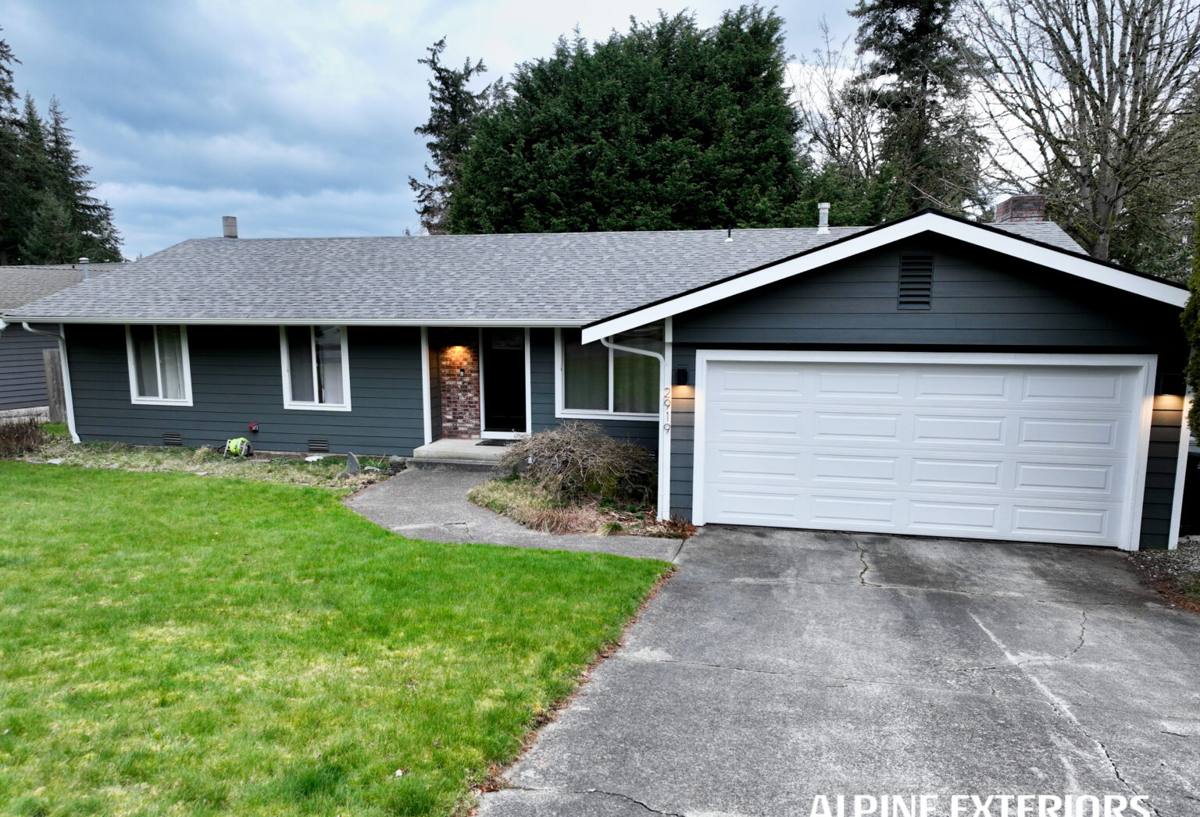
What Salt Air, Driving Rain, and Moss Actually Do to Siding
Salt Air and Corrosion
Airborne salt is corrosive to metal fasteners, flashing, and trim. On homes closer to the water, salt residue also accumulates on siding surfaces and can accelerate wear on coatings that weren't formulated to shed it. This is one of the reasons fastener choice and flashing detail matter more in Birch Bay than they would on a home twenty miles inland.
Wind-Driven Rain
Rain that comes in at an angle finds every gap a straight-down rain never would — behind trim, at butt joints, around window and door penetrations, at the bottom edge of siding courses. Over time, water that gets behind siding and can't dry out is what causes rot in the sheathing and framing underneath, regardless of what the siding itself is made of. The siding material matters, but the water management behind it matters just as much.
Moss and Algae
Whatcom County's damp season runs long, and shaded north- and west-facing walls in Birch Bay often stay wet for days after a storm passes. Moss and algae need moisture and organic material to grow, and they'll colonize any siding surface that holds onto both. Some materials resist this better than others, and the factory finish on the siding plays a real role in how much upkeep a homeowner ends up doing.
Why James Hardie Fiber Cement Is What We Install
We standardized on James Hardie fiber cement siding company-wide, and Birch Bay's climate is a good illustration of why. Fiber cement is a mix of cement, sand, and cellulose fibers, which makes it non-combustible and dimensionally stable — it doesn't absorb and release moisture the way wood-based products do, so it isn't prone to swelling, cupping, or rotting from repeated wet-dry cycles the way engineered wood siding can be.
Climate-Engineered HZ Product Lines
James Hardie makes region-specific formulations under its HZ system, engineered for different climate zones' moisture and temperature patterns. For a marine climate like Birch Bay's, that engineering is aimed at exactly the exposure this area gets — sustained damp weather and coastal moisture, not just occasional rain.
ColorPlus Factory Finish
Most of what we install uses Hardie's ColorPlus finish — a factory-applied, baked-on coating that's more consistent and more resistant to fading and moisture damage than a field-applied paint job. It also means the color goes on before the siding ever sees a construction site, so there's no weather window to work around and no wet-paint vulnerability during installation. For homeowners dealing with a long moss season, a tighter, more consistent factory finish gives algae and moss less to grab onto than a porous or unevenly coated surface.
Warranty That Follows the Home
Hardie backs its siding with a substantial product warranty, and the ColorPlus finish carries its own separate finish warranty. Both are transferable, which matters in a market like Birch Bay where vacation and second homes change hands more often than in a typical inland neighborhood.
What a Correct Installation Involves Here
Fiber cement siding is only as good as the installation behind it. A textbook install and a rushed one can look identical for the first year and behave very differently by year five, especially in a coastal climate. Here's what we don't skip:
Water-Resistive Barrier and Flashing
Every wall gets a continuous water-resistive barrier, and every penetration — windows, doors, vents, hose bibs — gets properly integrated flashing so water that reaches the wall assembly is directed back out, not trapped behind the siding. Given how much wind-driven rain Birch Bay sees, this layer is not optional detailing; it's the difference between siding that lasts and framing that rots quietly for years before anyone notices.
Fastening and Clearances
James Hardie specifies fastener type, spacing, and placement, along with minimum clearances from grade, roof lines, decks, and other siding. We follow those specs to the letter, because incorrect fastening is one of the most common causes of Hardie siding problems reported anywhere — not the material failing, but the installation not matching the manufacturer's requirements. This also protects the warranty, which can be voided by off-spec installation.
Joints, Caulking, and Finish Work
Butt joints, corners, and trim intersections are where water most often finds a way in. We treat these as the highest-attention parts of the job, using the sealants and joint treatments Hardie specifies rather than shortcuts that look fine on installation day but fail after a season or two of coastal weather.
Comparing Siding Options for a Birch Bay Home
| Material | Moisture/Salt Air Behavior | Moss/Algae Resistance | Typical Maintenance | Why We Don't Install It |
|---|---|---|---|---|
| Vinyl | Doesn't rot, but can warp or crack in temperature swings and impacts | Moderate — can still host algae in shaded, damp spots | Low, but repairs mean full panel replacement | Not fire-rated; appearance and seams don't hold up to close inspection over time |
| LP SmartSide / engineered wood | Wood-based core; performs well when maintained but more moisture-sensitive at cut edges and joints | Moderate, depends on finish | Higher — edge sealing and touch-up matter | More installation-sensitive in wet climates; edge and joint failures are the main risk we've chosen not to carry |
| Cedar / primed wood | Natural material, absorbs and releases moisture, prone to rot without diligent upkeep | Low — organic surface, needs regular treatment | High — refinishing on a recurring schedule | Maintenance burden is heavy for a marine climate like this one |
| James Hardie fiber cement | Dimensionally stable, engineered HZ lines for marine/coastal exposure | Higher — factory finish resists buildup | Low — periodic washing, no refinishing needed | This is what we install |
This isn't a claim that other products can't work anywhere — it's why, given what Birch Bay's climate does to a house, we chose to specialize in one product system and install it correctly rather than offer several and install all of them adequately.
Our Process for a Birch Bay Project
- Walkthrough and assessment — we look at current siding condition, moisture damage, trim, and how the home is exposed to prevailing wind and rain direction.
- Scope and product selection — choosing the right Hardie plank profile, exposure, and finish for the home, plus any trim and flashing upgrades needed.
- Tear-off and sheathing check — old siding comes off and we inspect the sheathing underneath for rot or moisture damage before anything new goes on.
- Water-resistive barrier and flashing install — the part of the job that determines how the wall performs for the next twenty-plus years.
- Hardie siding installation — installed to manufacturer fastening, spacing, and clearance specs.
- Trim, caulking, and final finish — joints, corners, and penetrations sealed and finished.
- Final walkthrough — reviewed with the homeowner before we consider the job done.
What Affects Cost on a Birch Bay Siding Job
- Home size and number of stories
- Amount of trim, corners, and window/door penetrations
- Condition of existing sheathing (rot repair adds scope)
- Siding profile and exposure chosen (lap width, shake-style panels, etc.)
- Access — waterfront lots and tight setbacks can affect staging and labor
- Whether flashing and water-resistive barrier need full replacement or partial repair
We give firm, itemized quotes after an in-person assessment rather than ballpark numbers over the phone — condition of what's underneath the current siding is often the biggest cost variable, and that's not something we guess at.
Why It Matters to Hire a Crew That Already Works Birch Bay
Installation details that are optional in a dry inland climate aren't optional here. A crew that regularly works Whatcom County's coastal communities already knows how to detail flashing for wind-driven rain, where moss tends to establish itself on local homes, and how salt exposure affects fastener and trim choices. That's not something you can fully substitute with general siding experience from a different climate — it's specific, and it shows up in how long the job actually lasts.
Living with Fiber Cement Siding Through Moss Season
Hardie siding with a ColorPlus finish needs very little upkeep, but it's not zero-maintenance. An occasional gentle wash — especially on shaded, north-facing walls where moss is most likely to establish — keeps the surface clean and lets you catch any caulking or trim issues early, before a wet winter turns a small gap into a bigger problem. Keeping shrubs and trees trimmed back from siding also helps those walls dry out faster between rains, which matters more in Birch Bay than in drier parts of the state.
If you're weighing a siding replacement in Birch Bay, we're glad to walk your home, point out anything the current siding or trim is already telling you, and put together a straightforward, no-pressure estimate. Use the form below to get started.