 Ferndale Siding
 Siding Installation Built for Bellingham's Climate
Bellingham homes sit close enough to the water and the foothills that they take a different kind of weather beating than houses further inland. Salt-laden air rolls in off Bellingham Bay, driving rain comes sideways off the Strait during winter storms, and the long, damp shoulder seasons keep exterior surfaces wet for weeks at a stretch. Add in tree cover and shaded north walls, and you get a moss season that can run from October well into spring. Siding here isn't just cosmetic — it's the first line of defense against moisture intrusion, and the material and installation quality both matter more in this climate than in drier parts of the state.
We install siding for homeowners throughout the Bellingham area as part of our regular service territory out of Ferndale, and we've built our process specifically around what this climate does to a wall system over time.
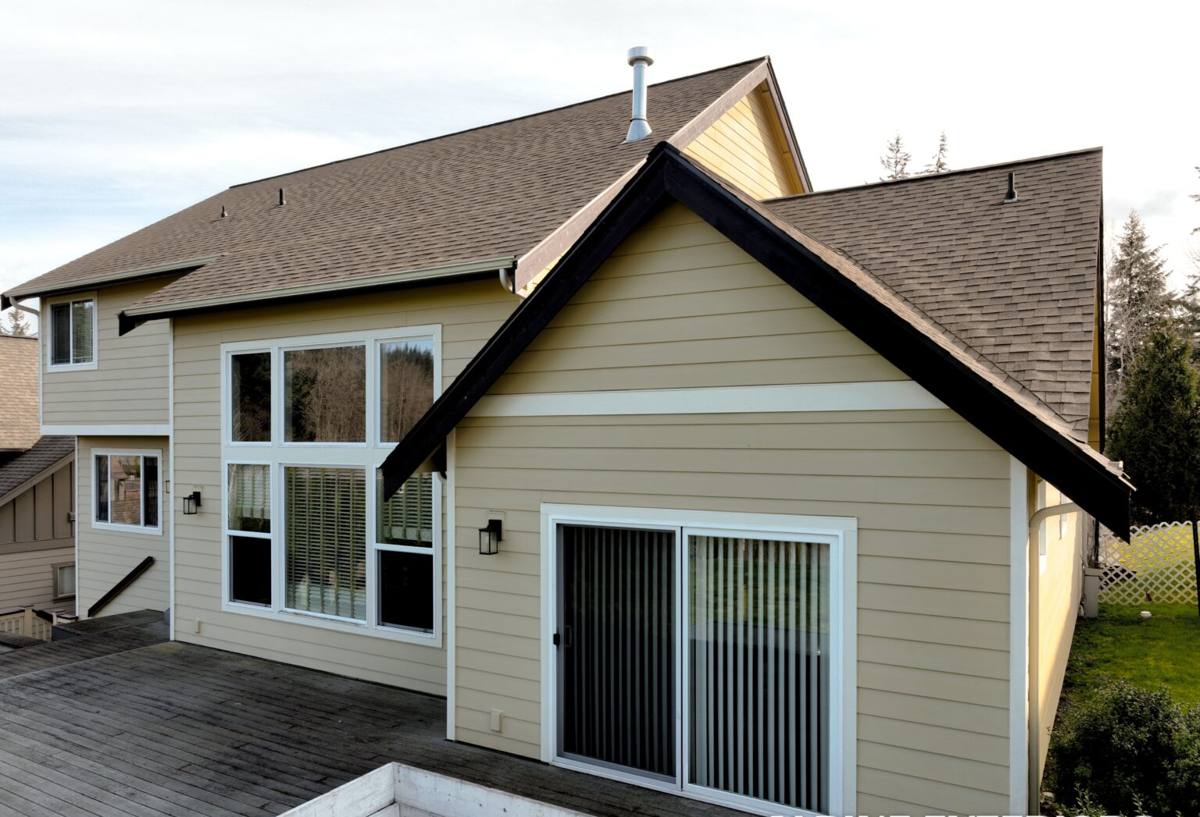
What Bellingham Homes Actually Need From Their Siding
Before talking about product or installation, it helps to be clear about what a siding system in this area is actually up against:
- Sustained moisture exposure — long stretches of rain and drizzle keep siding wet longer than a single storm event would, which matters for anything prone to swelling or rot.
- Salt air corrosion — proximity to the bay means airborne salt can accelerate the breakdown of fasteners, trim, and finishes that aren't rated for it.
- Moss and algae growth — shaded, damp wall sections grow moss and mildew readily, which can trap moisture against the substrate if the siding surface and joints aren't properly sealed and shedding water correctly.
- Wind-driven rain — storms off the Strait push rain into joints, laps, and penetrations that would stay dry in calmer weather, so flashing and lap details carry more weight here than in a mild climate.
- Temperature swings between seasons — siding needs to handle both a wet, cool winter and warmer, drier summer stretches without excessive expansion, contraction, or finish fading.
Any siding product can be installed on a Bellingham home. Not every siding product is built to hold up to what actually happens to it here.
Why We Install James Hardie Fiber Cement — And Nothing Else
We are a James Hardie–only contractor. We don't install vinyl, LP SmartSide, cedar, primed spruce, Cemplank, or Allura, and that's a deliberate standard, not a limitation of what we're capable of installing. Each of those products has legitimate strengths, but each also carries a real-world trade-off that matters more in a wet, salt-air coastal climate than it would somewhere drier:
- Vinyl can warp or become brittle with temperature swings and doesn't offer the same fire resistance or paintable, factory-finished durability.
- Wood-based products (cedar, primed spruce, LP SmartSide) are organic materials — even with treatments and coatings, they're more vulnerable to moisture absorption, swelling, and rot in a climate where surfaces stay wet for extended periods.
- Other fiber cement brands (Cemplank, Allura) compete on the same basic material category as Hardie, but we've standardized on one manufacturer so we can guarantee consistent installation specs, warranty terms, and color-match performance across every job we do.
James Hardie fiber cement is non-combustible, dimensionally stable in wet-dry cycling, and available in the HZ5 product line engineered for climates like ours. Its ColorPlus factory finish is baked on under controlled conditions rather than field-applied, which means better fade and moisture resistance than a job-site paint job, and a stronger, more consistent warranty backing it. For a Bellingham home dealing with salt air, driving rain, and moss for a good chunk of the year, that combination is what actually holds up — not just what looks good on a spec sheet.
Fiber Cement vs. Other Siding Options in This Climate
| Factor | James Hardie Fiber Cement | Vinyl | Wood / Wood-Composite |
|---|---|---|---|
| Moisture resistance | High — cement-based, won't rot or swell | Moderate — can warp, seams can leak | Lower — organic material, needs ongoing sealing/paint upkeep |
| Fire resistance | Non-combustible | Combustible | Combustible |
| Finish durability | Factory-baked ColorPlus finish | Color molded in, can fade/chalk | Field-applied paint/stain, needs recoating |
| Coastal/salt air suitability | Engineered HZ5 line for wet climates | Generally fine, seams are the weak point | More vulnerable without diligent maintenance |
| Typical warranty | Long-term, transferable | Varies by manufacturer | Often limited or coating-only |
What Correct Siding Installation Involves
Material choice only gets a Bellingham home halfway there. Fiber cement siding installed to spec performs the way it's supposed to; fiber cement siding installed with shortcuts can fail early regardless of the product's reputation. A correct installation includes:
- Proper water-resistive barrier and flashing at every window, door, and penetration, lapped correctly so water sheds outward and down, not behind the siding.
- Correct fastener type and placement — Hardie specifies fastener material, size, and spacing for a reason, and using the wrong fastener undermines the whole system's fire and moisture performance.
- Manufacturer-specified clearances at the ground, roofline, and deck attachments, so siding isn't sitting in standing water or trapping moisture against untreated wood.
- Properly sized gaps and caulked joints that allow for expansion without letting water track in behind the boards.
- Ventilation behind the cladding where the wall assembly calls for it, so moisture that does get in has somewhere to go instead of sitting against the sheathing.
Skipping any one of these doesn't usually show up as a problem in year one. It shows up two, five, or ten years later as moisture damage, moss buildup behind trim, or premature caulk and paint failure — the exact issues Bellingham's climate is primed to cause if a wall system gives it any opening.
Our Installation Process
1. On-Site Assessment
We start by walking the home and evaluating the current siding, sheathing condition where visible, drainage patterns around the foundation, and any trouble spots — shaded walls prone to moss, areas with a history of moisture intrusion, roofline and deck intersections that need careful flashing.
2. Tear-Off and Substrate Check
Old siding comes off and we check the sheathing and water-resistive barrier underneath before anything new goes on. If we find rot or water damage from a prior installation, we address it before covering it back up — installing new siding over a compromised substrate just hides the problem.
3. Weather Barrier and Flashing
This is where a lot of the long-term performance gets decided. We install and lap the weather-resistive barrier and flashing per manufacturer and code requirements at every window, door, and penetration point.
4. Hardie Panel or Lap Installation
Siding goes on per James Hardie's fastening and clearance specifications for our climate zone, using the HZ5 product line engineered for wet, coastal-influenced conditions.
5. Trim, Caulking, and Final Detailing
Trim, corners, and joints get sealed correctly, with attention to the details that keep moss and water from finding a way in over the following years, not just at the walkthrough.
6. Final Walkthrough
We review the finished job with the homeowner, covering what was done, what to expect from the ColorPlus finish over time, and any basic upkeep worth knowing about.
Maintenance Realities for This Area
Even the right product installed correctly benefits from a little seasonal attention in a climate like Whatcom County's:
- Periodically rinse siding, especially shaded and north-facing walls, to keep moss and algae from establishing.
- Keep gutters clear so overflow isn't running down the siding face during heavy rain events.
- Trim back vegetation that keeps a wall section shaded and damp longer than the rest of the house.
- Have caulked joints and trim checked periodically — caulk is the one component that ages faster than the siding itself.
None of this is heavy maintenance — fiber cement is chosen specifically because it doesn't demand much — but a few minutes of seasonal attention goes a long way in this climate.
Why Local Installation Experience Matters
A crew that regularly works Bellingham and the surrounding Whatcom County area already understands which walls on a given lot orientation take the worst of the wind-driven rain, where moss tends to establish first, and how to detail flashing for a climate that stays wet for months at a time rather than getting occasional storms. That's not something a general framework of "install siding to code" fully covers — it's pattern recognition built from doing this work in this specific environment, on homes dealing with the same salt air and rain exposure as yours.
If you're considering siding replacement for a Bellingham-area home, we're happy to walk the property, look at what your current siding and substrate are dealing with, and put together a straightforward estimate — no pressure, no hard sell, just a clear look at what your home needs.