 Ferndale Siding
 Roof Repair Built for Bellingham's Marine Climate
Bellingham sits on the Salish Sea, and that location shapes everything about how a roof ages here. Homes get a steady mix of salt-laden marine air, wind-driven rain off the water, and long stretches of grey, damp weather that never quite dries a roof out between storms. Add in the heavy tree canopy that covers much of Whatcom County — cedar, fir, and maple hanging over rooflines in older neighborhoods and newer developments alike — and you get near-constant shade, dropped needles, and moisture that sits on shingles far longer than it would in a drier climate.
None of that means Bellingham roofs are doomed to fail early. It means they need repair work that actually accounts for the local conditions instead of a generic patch job. A roof repair here has to deal with moss roots that have worked into shingle mat, flashing that's corroding faster than it would inland, and valleys and low-slope sections that hold water longer than the rest of the roof. That's the difference between a repair that lasts and one you're paying for again in two years.
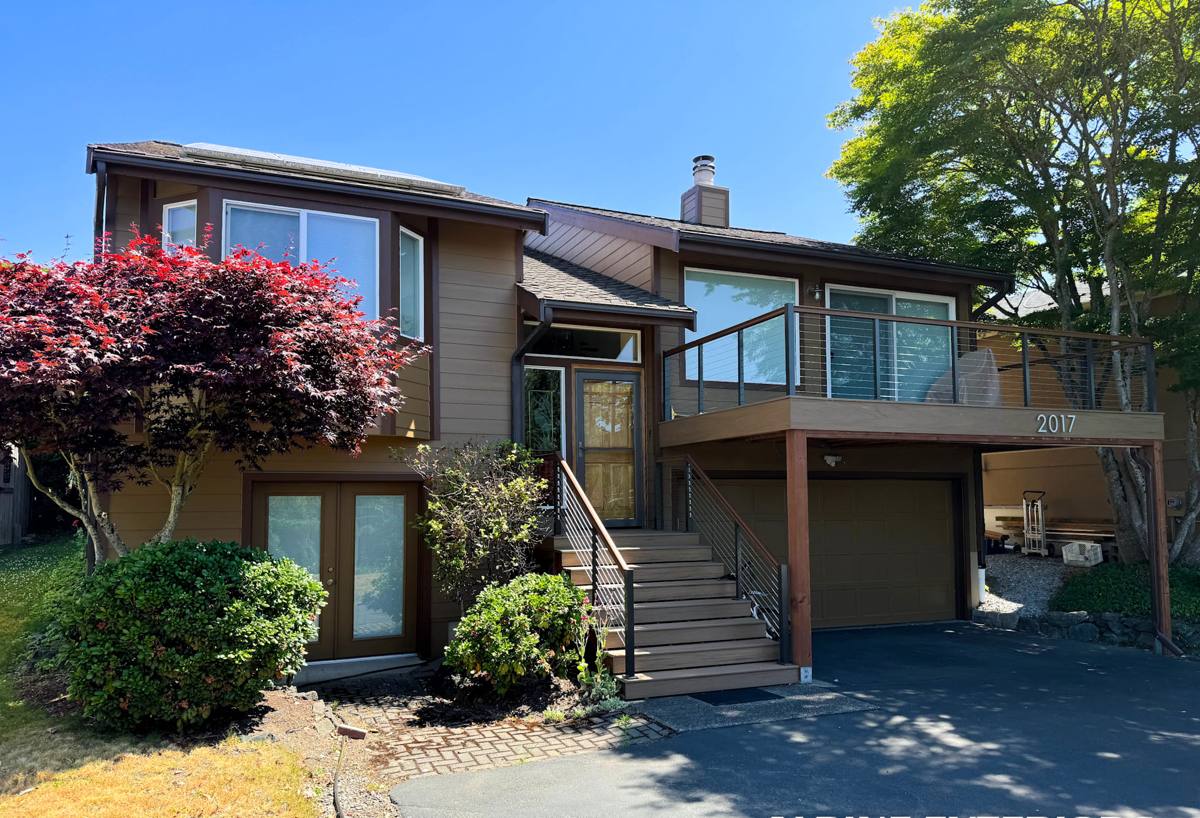
Signs a Bellingham Roof Needs Repair — Not Full Replacement
Most roofs don't fail all at once. They show localized problems first, and catching those early is usually what keeps a homeowner in repair territory instead of tearing the whole roof off. Watch for:
- Granule loss showing up as bare, shiny patches on shingles, especially on south- and west-facing slopes
- Shingles curling, cracking, or missing after a windstorm off the Sound
- Thick moss mats along ridge lines and in shaded valleys, especially where tree cover is heavy
- Rust streaks or soft spots around metal flashing at chimneys, skylights, and roof-to-wall transitions
- Water stains on interior ceilings or attic sheathing, particularly after a stretch of heavy rain
- Sagging or spongy spots underfoot in valleys or low-slope sections
- Gutters overflowing or pulling away, which points to backed-up debris or a roof edge that's no longer shedding water cleanly
Any one of these on its own is often a straightforward repair. Several showing up together, or a roof that's already had multiple past patches, is usually the point where a full inspection needs to look at whether repair still makes sense.
What Moss, Salt Air, and Driving Rain Actually Do to a Roof
Moss and Organic Growth
Moss doesn't just sit on top of shingles — it roots into the mat, lifting edges and holding water against the surface long after the rest of the roof has dried. In Whatcom County's shaded lots, moss season can run most of the year, not just the wet months. A repair that clears visible moss but doesn't treat what's underneath, or doesn't address the shade and debris that let it take hold, tends to come back within a season or two.
Salt Air and Metal Corrosion
Proximity to the Sound means airborne salt reaches roofs and accelerates corrosion on exposed metal — flashing, fasteners, vents, and gutter hardware. Corroded flashing is one of the most common causes of a leak that looks like it's coming from the shingles but is actually coming from a failed metal detail underneath.
Wind-Driven Rain and Flashing
Rain here doesn't always fall straight down. Wind off the water can drive it sideways into vertical transitions — chimneys, dormers, sidewalls — where standard shingle coverage alone isn't enough. These spots depend entirely on flashing that's installed correctly and sealed with the right material, not just tucked and caulked.
What a Correct Roof Repair Actually Involves
A repair that's done right starts with figuring out the actual cause, not just covering the symptom a homeowner can see. A stain on a ceiling might trace back to a nail pop, a flashing gap, or moss holding water three feet away from where the leak shows up inside. Chasing the visible spot without tracing the water path is the most common reason repairs fail to hold.
A proper repair generally includes:
- Tracing the leak or damage to its actual source, not just the point where it's visible
- Removing and replacing damaged shingles, underlayment, or sheathing — not just sealing over them
- Reworking or replacing flashing at any transition involved, matched to the metal and profile already on the roof
- Treating moss and organic growth at the root, including clearing debris that's feeding it
- Checking attic ventilation in the affected area, since poor airflow accelerates moisture damage from the inside
- Matching replacement shingles as closely as possible in color and profile so the repair doesn't stand out
What we try to avoid is the quick fix — a bead of sealant over a symptom that will just show up again once the next storm hits. It looks like a repair on the invoice, but it isn't one on the roof.
Our Roof Repair Process
- Inspection. We look at the reported problem area and the full roof, since Bellingham's climate rarely produces just one isolated issue.
- Written scope. You get a clear explanation of what's actually wrong, what we recommend, and why — before any work starts.
- Repair. We do the work to match the existing roof system as closely as possible, using materials suited to marine, moss-prone conditions.
- Cleanup. Old material, debris, and moss removed from the roof and gutters — not just the repair area.
- Follow-up. We tell you what to watch for and when it's worth a check-in, especially heading into the wet season.
Repair or Replace? How We Help You Decide
Not every roof problem calls for a full replacement, and not every roof is a good candidate for another round of patches. We walk through it honestly with you rather than defaulting to the bigger job.
| Factor | Points Toward Repair | Points Toward Replacement |
|---|---|---|
| Roof age | Under roughly 15 years, materials still sound | Nearing or past the shingle's rated lifespan |
| Damage extent | Localized — one slope, one valley, one flashing point | Spread across multiple slopes or recurring in the same areas |
| Repair history | First or second repair on this roof | Third-plus repair, or prior patches already failing |
| Decking condition | Solid sheathing underneath damaged shingles | Soft, rotted, or delaminated sheathing found on inspection |
| Moss/organic history | Manageable with treatment and maintenance | Long-term moss growth has degraded the mat broadly |
Materials We Use for Repairs in Whatcom County Conditions
What we use to repair a section depends heavily on what's already on the roof and how that material handles the local climate. Here's how the common roof types in this area hold up to moss, salt air, and driving rain — and what that means for repair work.
| Material | Behavior in Local Climate | Repair Considerations |
|---|---|---|
| Composition (asphalt) shingle | Most common; moderate moss resistance, granule loss over time in shaded, damp spots | Straightforward to patch if matching shingles are available; color match gets harder as the roof ages |
| Cedar shake | Traditional look, but absorbs and holds moisture — high moss and rot risk under heavy tree cover | Repairs require careful attention to moisture behavior underneath; we're upfront about the ongoing maintenance this material demands here |
| Metal roofing | Sheds moss and water well, but exposed fasteners and flashing are vulnerable to salt-air corrosion | Repairs focus on fastener and seam integrity rather than the panels themselves |
We're not going to talk you into a material that doesn't suit the way water and shade behave on your specific roof. If cedar shake is already installed, for example, we'll repair it properly — but we'll also be straight with you about the maintenance schedule that material needs in a climate this wet and shaded.
Why Hire a Crew That Already Works in Bellingham
Roof repair looks different depending on where you are. A crew that mostly works drier inland climates isn't going to think about moss the way a Whatcom County roof demands, or recognize how fast salt air corrodes flashing near the Sound. Working in Bellingham and the surrounding area regularly means knowing:
- Which neighborhoods have the heaviest tree cover and the moss patterns that come with it
- How local wind and rain direction tends to expose certain roof faces and transitions more than others
- What shingle colors and profiles are common locally, which makes matching a repair section easier
- How older roof systems in the area were typically built, which matters when tying a repair into existing flashing and decking
That local familiarity shortens the diagnosis process and reduces the guesswork — we're not learning the climate on your roof.
Maintenance Checklist Between Repairs
A repair holds longer when it's paired with basic upkeep suited to this climate. This is what we recommend to homeowners in the Bellingham area:
- Clean gutters and downspouts at least twice a year — more often under heavy tree cover
- Trim back branches overhanging the roof to cut down shade and debris that feed moss
- Have moss growth treated before it spreads into thick mats, not after
- Check attic ventilation annually — poor airflow speeds up moisture damage from underneath
- Walk the roofline visually after major windstorms for lifted or missing shingles
- Have flashing points inspected every few years, since that's where most leaks actually start
If you're seeing any of the warning signs above, or just want an honest read on what shape your roof is really in, we're glad to take a look. The estimate is free, there's no pressure to book anything on the spot, and you'll get a straight answer about whether you're looking at a repair or something bigger — fill out the form below to get started.